NYC Outdoor Dining:
From Seasonal Necessity to Year-Round Opportunity
Summary
New York City's outdoor dining program has undergone one of the most rapid and transformative evolutions in the city's modern history. What began as an emergency response to the COVID-19 pandemic has since reshaped the way New Yorkers engage with their neighborhoods, local businesses, and public space.
As the city and its council members push for the transition from a seasonal outdoor dining model to a year-round framework, a common question has now become an inevitable one: how can policy balance the success of small businesses, the identity of our neighborhoods, and the demands of sustaining our city's infrastructure?
We see year-round outdoor dining as a more equitable and community-oriented model—one that reflects both the cultural shift in our communities toward outdoor living and the operational realities facing New York City's restaurant industry.
A Lasting Shift in Behavior and Expectations
The COVID-19 pandemic did more than temporarily change where New Yorkers dined – it fundamentally altered how we value outdoor space. During a period of uncertainty and isolation, outdoor dining became a safe and vibrant outlet for connection – restoring a sense of normalcy and community.

Recent reporting across dozens of outlets highlights that city officials are now actively advancing plans to reintroduce year-round outdoor dining, signaling recognition that the outdoor dining program is as critical for local businesses as it is for the social fabric of our city.
This shift would align New York more closely with other global cities—Paris, Barcelona, and Melbourne among them—where outdoor dining is a core component of daily urban life. In these environments, the intersection of public space, commerce, and community is not seasonal; it's continuous.
New Yorkers have now experienced this model firsthand—and expectations have changed accordingly.
The Challenge of the Seasonal Model
While the current seasonal outdoor dining framework has enabled participation, it also represents inefficiencies that disproportionately burden small businesses.
Although Outdoor Dining Group's full-service business model has simplified participation for our clients, there are fundamental issues with the rules as they exist today.
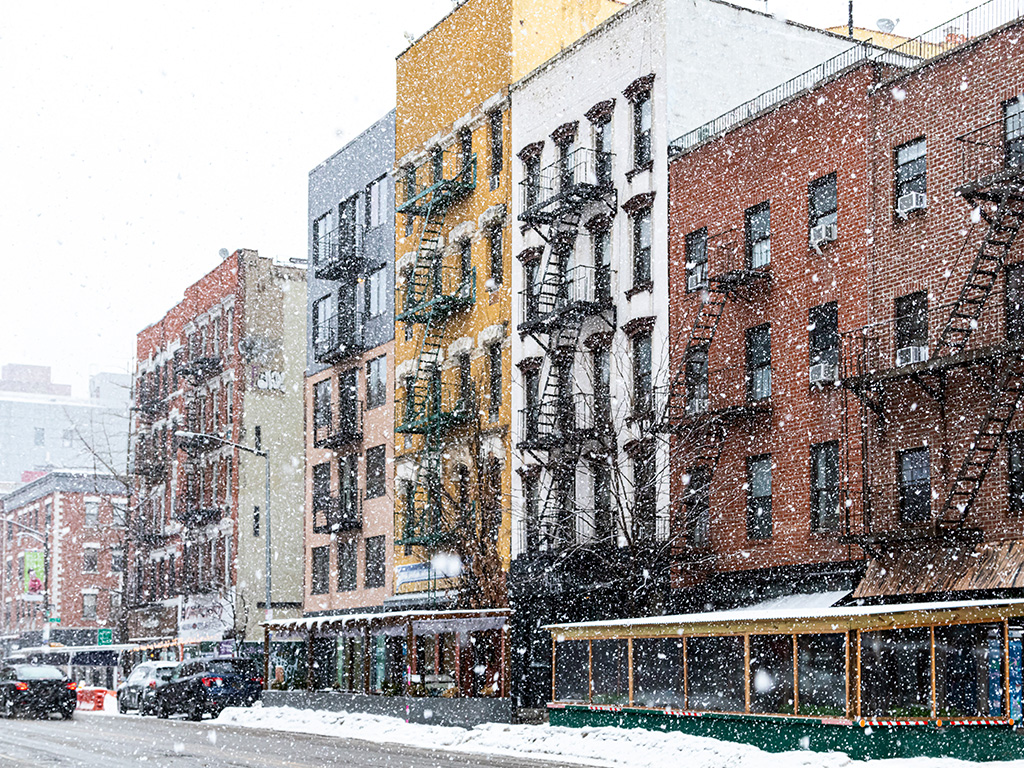
A seasonal model inherently treats outdoor dining as an expense rather than an asset. Restaurants are required to invest in solutions for a limited window of use. This dynamic creates a high-pressure equation: revenue generated must quickly justify costs, or participation becomes untenable. For many businesses already navigating rising rents, increased labor costs, and supply chain uncertainty, the additional commitment of resources demands clarity on the ROI.
The financial challenge has been compounded by the city's inconsistent enforcement of regulations (scarce penalties for non-compliant structures), extreme delays in permit processing (upwards of 8 months from application to issuance), and revocation of the 'conditional approval' policy that allowed businesses to install compliant units while awaiting their official permit.
In effect, the seasonal model narrows access to the program, fails to incentivize (or reward) compliance with the regulations, and requires financial flexibility beyond what many small businesses are able to sustain.
Year-Round Dining as an Economic Equalizer
A year-round outdoor dining model presents a fundamentally different economic proposition.
By extending the usable life of outdoor structures across all seasons, participation shifts from a recurring expense to a long-term investment. Infrastructure can be amortized over time, allowing businesses to build equity rather than absorb repeated overhead.
This shift is particularly meaningful for small businesses. Instead of evaluating outdoor dining through the lens of short-term ROI, operators can plan for sustained utilization, integrating outdoor seating into their core business model rather than treating it as a seasonal extension.
Year-round access also stabilizes revenue potential. Shoulder seasons – early spring, late fall, and even milder winter days – become viable opportunities rather than lost time. With appropriate design and regulation, these periods can meaningfully contribute to overall performance. In a city where margins are often razor-thin, predictability and continuity are not luxuries…they're necessities.
Infrastructure Must Evolve with Policy
Transitioning to a year-round model will require thoughtful adaptation of program specifications, particularly with respect to comfort, safety, and durability. Outdoor Dining Group's structures maximize comfort within the strict regulations imposed by Dining Out NYC – adding utility by ensuring comfort in a wider range of weather through features like integrated lighting, louvered roofs, and plant- or plastic-based privacy barriers.
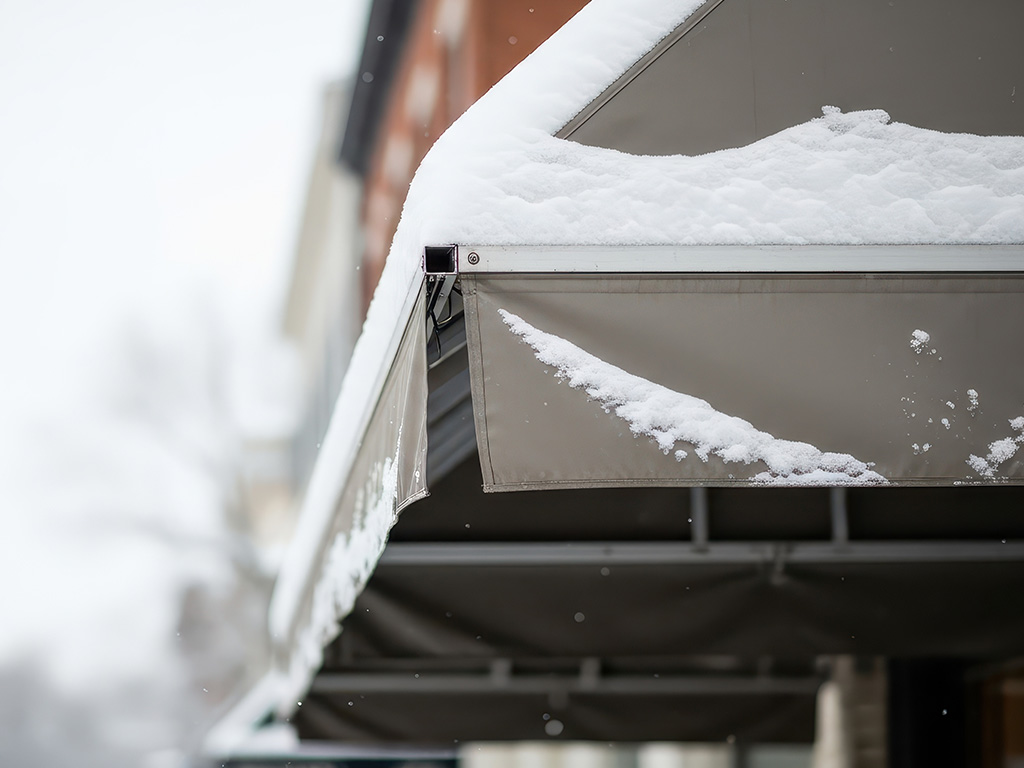
Still, compliant seasonal structures were never designed to support consistent use across varied or inclement weather conditions. Year-round participation demands a new standard—one that balances resilience and safety with customer comfort.
Regulations should evolve to allow better weather mitigation; allowing better protection from wind, precipitation, and cold temperatures while improving the effectiveness of integrated heating and cooling solutions.
At the same time, regulations (and enforcement) have to address legitimate concerns around misuse, safety, accessibility, and hygiene – ensuring that structures enhance, rather than detract from, our neighborhoods and their livability.
Done correctly, these adaptations will not only improve functionality but also elevate the overall quality, comfort, and consistency of outdoor dining across the city.
A Model Designed for Longevity
Outdoor Dining Group was founded in response to a clear need: to reduce the operational burden associated with participating in New York City's outdoor dining program, particularly for small businesses.
Under a seasonal framework, our model has focused on leasing structures combined with comprehensive services including delivery, installation, and storage – removing both financial and logistical barriers for operators. A one-stop, full-service solution for a fixed, affordable rate.
In anticipation of the shift to a year-round model, we have already evolved our service model to ensure business owners can maximize ROI and build equity without complicating participation. Updated Service Agreements now include lease-to-own provisions; giving our clients the ability to own their structures outright should they no longer require the seasonal logistic support we currently provide. Combined with best-in-class structures, which are designed to last for decades, this approach delivers a sustainable and financially accessible pathway to long-term program participation.
The Takeaway
Outdoor dining in New York City is no longer an experiment – it is an essential component of the city's identity and one we're proud to support.
The transition to a year-round model represents more than a policy adjustment; it's an opportunity to reimagine how our public space, commerce, and community intersect...and eventually, harmonize. By aligning infrastructure and regulation, the city can maintain a program that's not only sustainable, but transformative.
For small businesses, the shift would offer a chance to participate on more stable, equitable, and financially justifiable terms. For residents, it promises a richer, more connected urban experience.
And for our city as a whole, it reinforces what has always made New York unique: its ability to adapt, to innovate, and to bring people together – out in the open.
Here's to living and dining in New York!